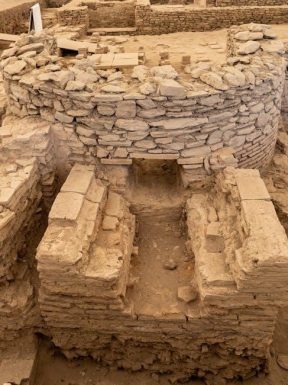
Discover pivotal insights into this ancient society via digitized resources like Marshall’s “Mohenjo Daro” (1931) and Wheeler’s “Civilizations of the Indus Valley” (1966)‚ available as PDFs.
Historical Context & Discovery
Early explorations in the 1920s‚ following limited 19th-century accounts‚ formally unveiled the Indus Valley Civilization. Sir John Marshall spearheaded excavations at Mohenjo-daro‚ documented in his 1931 publication‚ now accessible as a PDF through the Internet Archive.
Sir Mortimer Wheeler later contributed significantly‚ detailing findings in “Civilizations of the Indus Valley and Beyond” (1966)‚ also available digitally. These foundational works‚ alongside ongoing research‚ reveal a sophisticated Bronze Age society predating Vedic India‚ offering invaluable historical context through digitized resources.
Geographical Extent of the Indus Civilization
The Indus Civilization spanned a vast area‚ encompassing modern-day Pakistan and northwest India‚ extending into parts of Afghanistan and Iran. Resources like digitized versions of Marshall’s and Wheeler’s works (available as PDFs) illustrate settlements along the Indus River and its tributaries.
Rainfall varied‚ with moderate levels in the valley and higher precipitation in the northern hills‚ supporting agriculture. Archaeological data‚ accessible through online archives‚ maps the civilization’s reach‚ revealing a network of interconnected urban centers and rural communities.
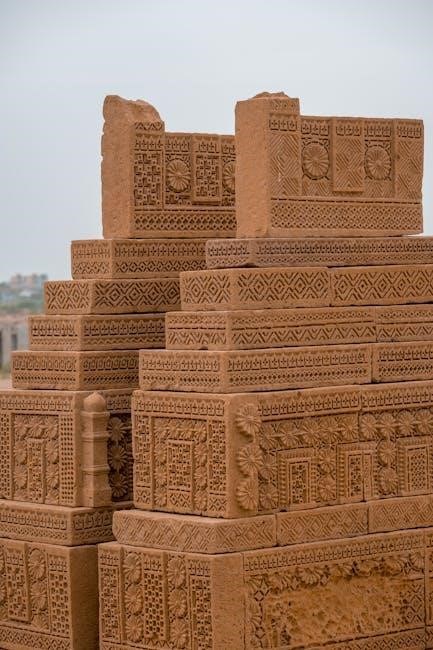
Key Sites of the Indus Valley Civilization
Explore major locations – Mohenjo-daro‚ Harappa‚ Dholavira‚ and Lothal – detailed in scholarly PDFs like those by Marshall and Wheeler‚ revealing urban life.
Mohenjo-daro: A Detailed Overview
Mohenjo-daro‚ a cornerstone of Indus Valley archaeology‚ is extensively documented in Sir John Marshall’s 1931 publication‚ accessible as a PDF through the Internet Archive. This foundational text details the city’s remarkable urban planning‚ including its grid layout and sophisticated drainage systems. Marshall’s work meticulously describes residential structures‚ public buildings‚ and‚ most famously‚ the Great Bath. Further insights are available through Wheeler’s “Civilizations of the Indus Valley and Beyond‚” offering comparative analysis. These PDF resources provide invaluable details regarding the site’s excavation and the artifacts discovered‚ painting a vivid picture of life in this ancient metropolis.
Harappa: Excavations and Findings
Harappa‚ alongside Mohenjo-daro‚ represents a crucial site for understanding the Indus Civilization. Detailed excavation reports and findings are partially accessible through digitized resources like those referenced in the Internet Archive. While a dedicated PDF solely on Harappa is less prominent than Marshall’s work on Mohenjo-daro‚ Wheeler’s “Civilizations of the Indus Valley and Beyond” provides comparative context. Discoveries at Harappa reveal advanced urban planning‚ standardized brick construction‚ and evidence of thriving trade networks. These resources illuminate the site’s significance and contribute to a broader understanding of Indus society.
Dholavira: Unique Features and Significance
Dholavira distinguishes itself with unique features like its sophisticated water management system and large stone architecture‚ setting it apart from other Indus sites. While a comprehensive PDF specifically detailing Dholavira’s excavations isn’t directly linked in the provided sources‚ Wheeler’s “Civilizations of the Indus Valley and Beyond” offers valuable comparative insights. The site’s elaborate city planning‚ including fortified citadels and reservoirs‚ highlights advanced engineering skills. Studying Dholavira expands our understanding of the Indus Civilization’s regional diversity and adaptability.
Lothal: The Port City and Maritime Trade
Lothal‚ a crucial port city‚ demonstrates the Indus Civilization’s extensive maritime trade networks. Though a dedicated PDF focusing solely on Lothal isn’t directly available within the provided resources‚ Marshall’s “Mohenjo Daro and the Indus Civilization” and Wheeler’s work offer contextual understanding of Indus trade practices. The discovery of a dockyard suggests sophisticated shipbuilding and navigation skills. Lothal’s strategic location facilitated commerce with Mesopotamia and beyond‚ showcasing the civilization’s economic prowess and interconnectedness.
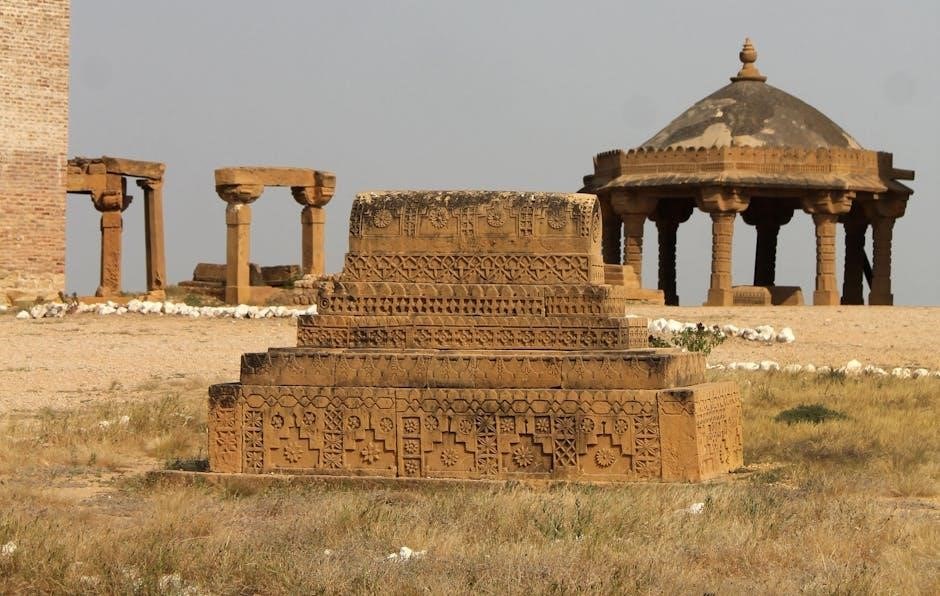
Urban Planning and Architecture
Explore the Indus cities’ remarkable layouts and standardized brickwork through digitized texts like Marshall’s (1931) and Wheeler’s (1966) PDF analyses.
Grid Pattern and Standardized Brick Sizes
Remarkably‚ Indus cities exhibited sophisticated urban planning‚ notably a grid-like street layout‚ facilitating efficient movement and organization. Archaeological reports‚ accessible as PDF documents like Marshall’s “Mohenjo Daro and the Indus Civilization” (1931)‚ detail this feature. Furthermore‚ the consistent use of standardized brick sizes—typically in a 1:2:4 ratio—across sites suggests centralized control and advanced engineering. Wheeler’s “Civilizations of the Indus Valley and Beyond” (1966)‚ also available digitally‚ corroborates this observation‚ highlighting the uniformity in construction materials and techniques. This standardization streamlined building processes and contributed to the cities’ structural integrity.
Advanced Drainage Systems
Notably‚ the Indus Valley Civilization possessed remarkably advanced sanitation systems‚ showcasing a keen understanding of public health. Detailed illustrations and descriptions of these systems are preserved in archaeological reports‚ readily available as PDFs. Marshall’s “Mohenjo Daro and the Indus Civilization” (1931) meticulously documents the elaborate network of brick-lined drains and covered sewers. Wheeler’s “Civilizations of the Indus Valley and Beyond” (1966) further emphasizes the sophistication‚ noting the presence of soak pits for waste management. This infrastructure demonstrates a level of urban planning unparalleled for its time.
The Great Bath at Mohenjo-daro
Central to Mohenjo-daro’s public life was the Great Bath‚ a large‚ brick-lined pool suggesting ritualistic bathing or communal ceremonies. Detailed analyses and photographic documentation of this structure are found within digitized archaeological reports‚ accessible as PDFs. Sir John Marshall’s “Mohenjo Daro and the Indus Civilization” (1931) provides extensive descriptions and plans. Sir Mortimer Wheeler’s work‚ “Civilizations of the Indus Valley and Beyond” (1966)‚ contextualizes its significance within the broader urban landscape‚ highlighting its unique construction.
Residential Buildings and Public Structures
Indus cities featured well-planned residential areas alongside public buildings‚ showcasing sophisticated urban design. Detailed architectural plans and analyses are preserved in digitized archaeological reports available as PDFs. Marshall’s “Mohenjo Daro and the Indus Civilization” (1931) meticulously documents house layouts and public spaces. Wheeler’s “Civilizations of the Indus Valley and Beyond” (1966) offers comparative insights‚ illustrating the standardization of building techniques and the functional organization of these ancient settlements.
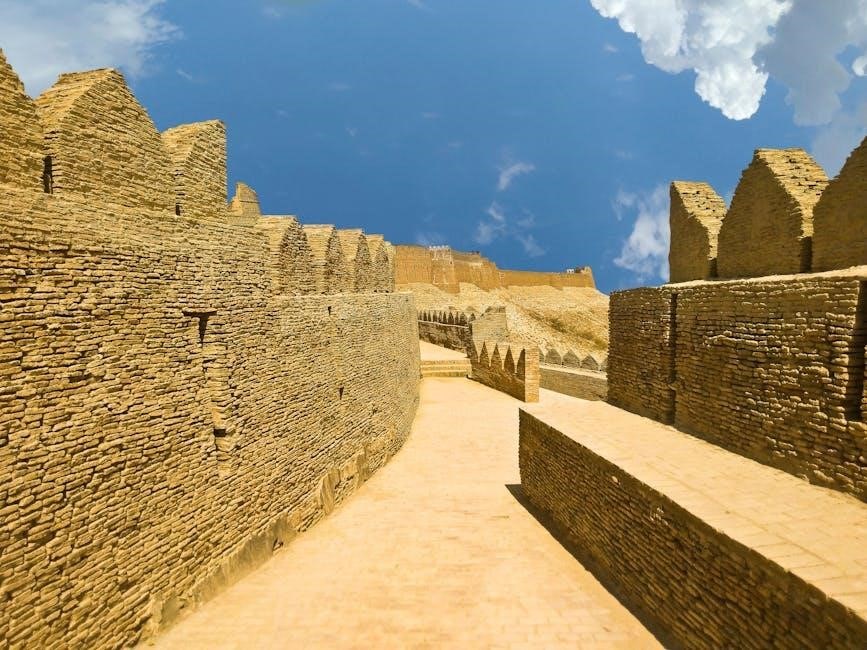
Economic Life of the Indus People
Explore their agriculture‚ trade‚ and craft production through detailed analyses found in digitized archaeological reports‚ conveniently accessible as comprehensive PDF documents.
Agriculture and Irrigation Techniques
Detailed examination of Indus agricultural practices‚ including wheat‚ barley‚ and oat cultivation in flooded plains‚ is available within digitized archaeological PDF reports. These resources‚ such as those by Marshall and Wheeler‚ illuminate how moderate rainfall – between 125 to 625 mm annually – supported farming.
Furthermore‚ precipitation in the northern hills fostered forested regions and grasslands for livestock. Understanding these techniques‚ alongside potential irrigation systems‚ requires consulting these invaluable primary source PDF documents for a comprehensive view of their economic foundations.
Trade and Commerce: Internal and External
Analyzing Indus trade networks requires accessing digitized archaeological PDF reports‚ like those authored by Marshall and Wheeler. These documents detail evidence of both internal exchange within the civilization and external commerce with regions in Western Asia.
Notably‚ the presence of sheep and goats – dominant in Western Asian civilizations – alongside cattle within the Indus Valley suggests robust trade connections. Further investigation through these PDF resources reveals the scope and nature of their commercial activities.
Craft Production: Pottery‚ Beads‚ and Metallurgy
Exploring Indus craft specialization benefits from detailed archaeological PDF reports‚ such as those by Marshall and Wheeler. These resources showcase the sophisticated pottery‚ intricate beadwork‚ and advancements in metallurgy achieved by Indus artisans;
Evidence suggests a thriving craft economy‚ supporting a complex social structure. Accessing these digitized documents allows researchers to analyze production techniques and the extent of trade involving these crafted goods‚ revealing economic intricacies within the civilization.
Social Organization and Daily Life
Uncover details of Indus society – stratification‚ diet‚ and recreation – through accessible PDF archives like those detailing Mohenjo-daro and Harappa’s findings.
Social Stratification and Class Structure
Analyzing the Indus Civilization’s social hierarchy remains complex‚ yet archaeological evidence‚ readily available in digitized PDF formats like Marshall’s work on Mohenjo-daro‚ suggests a degree of social organization. Variations in house sizes and access to resources hint at differing social strata.
While a rigid caste system isn’t definitively proven‚ distinctions existed. Access to crafted goods‚ like pottery and beads detailed in Wheeler’s “Civilizations of the Indus Valley‚” likely correlated with social standing. PDF resources offer visual evidence of these disparities‚ aiding modern interpretations of Indus society’s structure.
Diet and Clothing
Insights into the Indus people’s diet and clothing are gleaned from archaeological finds‚ documented in accessible PDF resources like those by Marshall and Wheeler. Evidence suggests a diet centered around wheat‚ barley‚ and oats cultivated in the flooded plains‚ as described in available texts.
Clothing likely consisted of cotton‚ though direct evidence is scarce. Depictions on seals and figurines‚ viewable in digitized PDF archives‚ offer clues. Animal products‚ including wool from sheep and goats‚ also contributed to their attire‚ reflecting the region’s pastoral elements.
Arts and Recreation
Exploring the artistic side of the Indus Valley Civilization is possible through detailed PDF documentation‚ such as Marshall’s work on Mohenjo-daro. Seals featuring animal motifs‚ intricate pottery‚ and skillfully crafted beads demonstrate their artistic prowess. These artifacts‚ readily available in digital archives‚ reveal a sophisticated aesthetic sensibility.
Recreation likely involved games and social gatherings‚ though concrete evidence remains limited. Figurines and depictions on seals hint at possible forms of entertainment‚ offering glimpses into their leisure activities‚ further detailed within accessible PDF resources.
Religion and Beliefs
Uncover religious practices via PDF analyses of seals – like the ‘Pashupati’ – and Mother Goddess figurines‚ revealing potential beliefs of the Indus people.
Evidence of Religious Practices
Archaeological discoveries offer glimpses into Indus Valley religious life‚ though a definitive understanding remains elusive. PDF resources‚ such as those detailing seal analysis‚ reveal depictions potentially linked to ritualistic practices. The prevalence of terracotta figurines‚ particularly those of Mother Goddesses‚ suggests fertility cults were significant.
Furthermore‚ the enigmatic ‘Pashupati’ seal‚ often interpreted as a proto-Shiva figure‚ hints at early yogic traditions or animal worship. While concrete temples haven’t been found‚ structures like the Great Bath at Mohenjo-daro may have served ritualistic cleansing purposes. Studying these artifacts through digitized archives provides crucial insights.
The Pashupati Seal and Proto-Shiva
The ‘Pashupati’ seal‚ a key artifact detailed in PDF analyses of Indus iconography‚ depicts a seated figure surrounded by animals. This figure‚ often interpreted as a proto-Shiva‚ exhibits features resembling later Hindu deities. Scholars debate whether this represents a true religious figure or a master of animals.
Its posture and surrounding fauna – elephants‚ tigers‚ rhinoceros‚ and buffalo – suggest power and control over nature. Digitized resources allow close examination of this seal‚ fueling ongoing discussions about its religious significance and potential links to Shaivism’s origins.
Mother Goddess Worship
Evidence from Indus sites‚ accessible through PDF archives like those detailing Mohenjo-daro‚ suggests widespread Mother Goddess worship. Terracotta figurines depicting females adorned with elaborate headdresses and jewelry are frequently discovered. These figures likely represent fertility‚ abundance‚ and the nurturing aspects of a divine feminine presence.
Scholars propose these figurines were central to household rituals‚ ensuring prosperity and childbirth. While a grand temple dedicated to a Mother Goddess remains unconfirmed‚ the sheer number of figurines indicates its pervasive role in Indus religious beliefs.

Language and Script
The Indus script remains undeciphered‚ a key mystery explored in PDF resources detailing the civilization’s artifacts and ongoing attempts at linguistic analysis.
The Indus Script: Undeciphered Mysteries
Despite extensive archaeological discoveries‚ the Indus script continues to baffle researchers‚ representing a significant challenge in understanding this ancient civilization. Numerous attempts at decipherment have been made‚ yet a conclusive translation remains elusive. Digitized resources‚ readily available as PDFs – such as those detailing Marshall’s and Wheeler’s findings – showcase the script’s recurring motifs and symbols. These documents highlight the complexity of the system‚ differing significantly from known ancient scripts. The lack of a bilingual Rosetta Stone-like artifact further complicates the process‚ leaving the language and meaning of these inscriptions shrouded in mystery‚ fueling ongoing scholarly debate and research.
Attempts at Decipherment
Scholars have proposed various theories to unlock the secrets of the Indus script‚ often referencing comparative linguistics and potential connections to Dravidian languages. Detailed analyses of the script’s symbols‚ as documented in accessible PDFs like Marshall’s “Mohenjo Daro‚” form the basis of these attempts. However‚ the brevity of inscriptions and the absence of long texts hinder definitive conclusions. While some patterns have been identified‚ a universally accepted decipherment remains elusive‚ prompting continued research and debate within the archaeological community‚ seeking a breakthrough in understanding this ancient communication system.
Possible Linguistic Affiliations
Despite the undeciphered script‚ linguistic connections are theorized‚ with Dravidian languages being a prominent hypothesis‚ supported by geographical distribution and structural similarities. Alternative suggestions include links to Indo-European or Austroasiatic language families. Examining these possibilities requires detailed comparative analysis‚ often utilizing resources available in PDF format‚ such as Wheeler’s “Civilizations of the Indus Valley.” However‚ conclusive evidence remains scarce‚ and the linguistic origins of the Indus people continue to be a subject of ongoing scholarly investigation and debate.
Political Organization
Evidence suggests a degree of centralized control‚ indicated by standardized brick sizes and urban planning‚ detailed in PDF resources like Marshall’s work.
Nature of Governance: Centralized or Decentralized?
Determining the Indus Valley Civilization’s governance remains a scholarly challenge. The remarkable uniformity in city planning – the grid patterns‚ standardized brick dimensions‚ and sophisticated drainage systems – strongly suggests a centralized authority capable of coordinating large-scale projects. Accessing digitized resources‚ such as Sir John Marshall’s “Mohenjo Daro and the Indus Civilization” (available as a PDF)‚ reveals the consistency across sites.
However‚ the vast geographical spread and limited evidence preclude definitively ruling out a degree of regional autonomy or decentralized administration. Further research‚ utilizing archaeological data and analyses presented in publications like Sir Mortimer Wheeler’s “Civilizations of the Indus Valley and Beyond” (also accessible in PDF format)‚ is crucial for a more nuanced understanding.
Evidence of Uniformity and Control
Striking uniformity characterizes the Indus Valley Civilization‚ indicating substantial control. Standardized brick sizes‚ consistent weights and measures‚ and remarkably similar town planning across sites like Mohenjo-daro and Harappa point to centralized oversight. Detailed analyses within digitized texts‚ such as Marshall’s “Mohenjo Daro” (1931)‚ a readily available PDF‚ highlight this consistency.
Furthermore‚ the advanced‚ coordinated drainage systems suggest a governing body capable of implementing and maintaining complex infrastructure. Wheeler’s “Civilizations of the Indus Valley and Beyond” (PDF accessible online) corroborates this‚ emphasizing the organized nature of Indus settlements.
Decline of the Indus Civilization
Explore theories regarding the civilization’s decline – climate change‚ invasions‚ or internal issues – through detailed archaeological reports available as accessible PDF documents.
Theories Regarding the Decline
Numerous hypotheses attempt to explain the Indus Valley Civilization’s demise around 1900 BCE. Climate change‚ specifically shifts in monsoon patterns and increased aridity‚ is a prominent theory‚ impacting agriculture. PDF resources‚ like those from the Internet Archive‚ detail evidence of environmental shifts.
Alternatively‚ theories suggest invasions‚ though concrete proof remains elusive. Internal conflicts and societal disruption are also considered. Examining digitized archaeological reports – Marshall’s and Wheeler’s works available as PDFs – provides nuanced perspectives on these complex factors‚ revealing a multifaceted decline rather than a single catastrophic event.
Climate Change and Environmental Factors
Evidence suggests a significant role for climate change in the Indus Civilization’s decline. The region experienced fluctuating rainfall‚ with potential shifts in river courses‚ impacting agricultural productivity. PDF documents‚ such as those detailing archaeological findings‚ illustrate changes in vegetation and water availability.
Increased aridity and potential tectonic events contributed to environmental stress. Accessing digitized reports – like Marshall’s and Wheeler’s available as PDFs – reveals insights into the civilization’s vulnerability to these factors‚ highlighting a complex interplay between human activity and environmental change.
Invasions and Internal Conflicts
While debated‚ theories propose invasions or internal strife contributed to the Indus Civilization’s decline. Archaeological PDF reports don’t definitively confirm large-scale invasions‚ but suggest potential disruptions. Evidence of altered settlement patterns and defensive structures hints at possible conflicts.
However‚ the lack of widespread destruction in many sites challenges the invasion hypothesis. Examining digitized resources‚ like Wheeler’s “Civilizations of the Indus Valley” (available as a PDF)‚ reveals nuanced interpretations‚ suggesting internal factors may have played a more significant role in societal breakdown.
Legacy and Influence
Explore the Indus Civilization’s lasting impact on later Indian cultures through detailed PDF analyses of archaeological findings and historical interpretations from digitized archives.
Impact on Later Indian Civilizations
Delve into the profound and enduring legacy of the Indus Valley Civilization‚ accessible through comprehensive PDF resources like those from the Internet Archive. These digitized works‚ including Marshall’s and Wheeler’s seminal texts‚ reveal potential continuities in urban planning‚ religious symbolism – notably proto-Shiva depictions – and craft traditions. Examine how standardized brick sizes and advanced drainage systems may have influenced subsequent settlements. Investigate the possible transmission of agricultural techniques and trade networks‚ shaping the foundations of later Indian societies. Discover insights into the evolution of religious beliefs and artistic motifs‚ tracing their roots back to this remarkable Bronze Age culture via detailed scholarly PDF analyses.
Continuity and Change
Explore the complex interplay of continuity and change within the Indus Valley Civilization’s legacy‚ utilizing accessible PDF documents from archives like the Internet Archive. Analyze how certain elements – agricultural practices‚ perhaps‚ or aspects of material culture – persisted while others underwent significant transformation. Investigate whether the decline resulted in abrupt disruption or gradual adaptation. Examine scholarly PDF analyses of the Indus script‚ seeking clues about linguistic connections to later Indian languages. Discover how urban planning concepts evolved‚ and whether religious beliefs experienced shifts in emphasis‚ all documented within these invaluable digitized resources.
Resources for Further Study (PDFs & Online Archives)
Access crucial research via digitized PDFs: Marshall’s “Mohenjo Daro” and Wheeler’s “Civilizations of the Indus Valley‚” readily available on the Internet Archive.
Marshall‚ Sir John ー Mohenjo Daro and the Indus Civilization (1931)
Sir John Marshall’s foundational 1931 work‚ “Mohenjo Daro and the Indus Civilization‚” remains a cornerstone for understanding this ancient culture. Available as a PDF through the Internet Archive‚ this 410-page volume meticulously details the excavations at Mohenjo-daro.
Marshall’s comprehensive report‚ scanned by C-DAC Noida‚ offers invaluable insights into urban planning‚ artifacts‚ and the daily life of the Indus people. The PDF is digitally republished by the Digital Library of India‚ ensuring accessibility for researchers and enthusiasts alike. Its ISBN is 978-92-3-102719-2.
Wheeler‚ Sir Mortimer ⎼ Civilizations of the Indus Valley and Beyond (1966)
Sir Mortimer Wheeler’s “Civilizations of the Indus Valley and Beyond” (1966)‚ accessible via the Internet Archive‚ provides a broader perspective on the Indus Civilization within its historical context. This 147-page book‚ published by Thames and Hudson in London‚ explores ancient history and India’s rich past.
Wheeler’s work‚ available as a PDF‚ delves into the civilization’s connections to western Asia. It’s a valuable resource for understanding the Indus Valley’s place in ancient history‚ complementing Marshall’s detailed excavation reports. Book Number: 44291.

Current Research and Ongoing Excavations
New interpretations and discoveries continually refine our understanding‚ with digitized archives – including PDF resources – fueling ongoing archaeological research and analysis.
New Discoveries and Interpretations
Recent archaeological endeavors are constantly reshaping perspectives on the Indus Valley Civilization. Access to digitized primary sources‚ such as Sir John Marshall’s comprehensive “Mohenjo Daro and the Indus Civilization” (1931)‚ now readily available as a PDF‚ allows researchers to re-examine foundational findings. Similarly‚ Sir Mortimer Wheeler’s “Civilizations of the Indus Valley and Beyond” (1966) provides crucial context.
These resources‚ alongside emerging data from ongoing excavations‚ contribute to nuanced interpretations of urban planning‚ societal structures‚ and the civilization’s eventual decline. Technological advancements in archaeological research further enhance these investigations.
Technological Advancements in Archaeological Research
Modern techniques are revolutionizing Indus Valley Civilization studies. Digitization projects‚ offering resources like Marshall’s “Mohenjo Daro” (1931) as a PDF‚ enable wider access to crucial data. Advanced imaging technologies‚ including LiDAR and 3D modeling‚ are creating detailed site reconstructions. Scientific analyses‚ such as residue analysis and ancient DNA studies‚ provide insights into diet‚ trade‚ and population movements.
These innovations‚ coupled with computational archaeology‚ are refining our understanding of this ancient society‚ building upon the foundations laid by earlier scholars like Wheeler.