
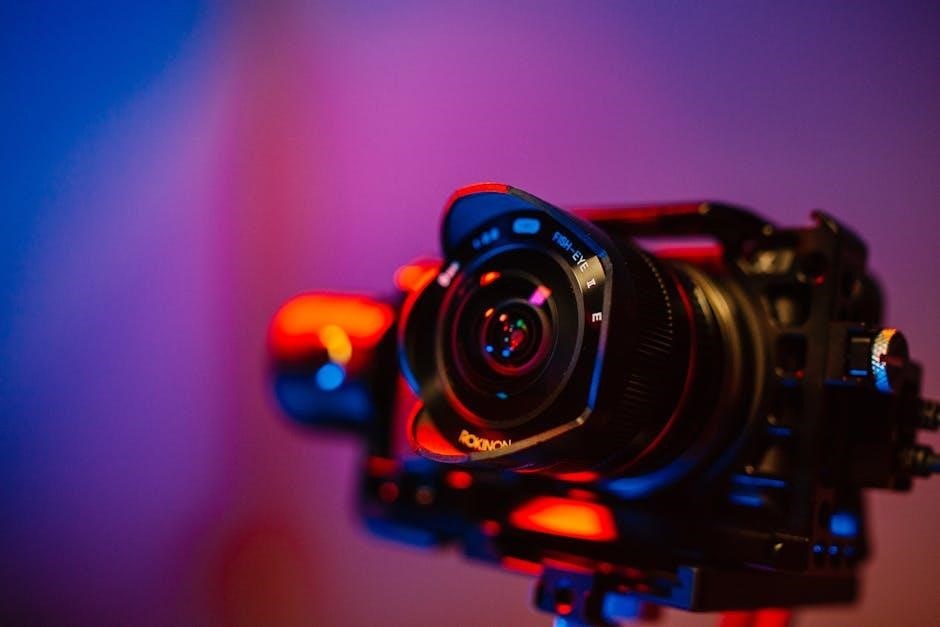
The Rokinon 2x Teleconverter extends lens reach‚ offering a cost-effective solution for wildlife or sports photography‚ as noted in various user reviews.
What is a Teleconverter?
A teleconverter is an optical lens placed between your camera body and lens‚ increasing the focal length – effectively zooming in further. Unlike digital zoom‚ which simply crops the image and reduces resolution‚ a teleconverter uses glass elements to magnify the image. This maintains image quality‚ albeit with some potential trade-offs.
Teleconverters are categorized by their magnification factor‚ commonly 1.4x or 2x. A 2x teleconverter‚ like the Rokinon model‚ doubles the focal length of your existing lens. For example‚ a 200mm lens becomes a 400mm lens. They offer a more affordable alternative to purchasing a dedicated super-telephoto lens‚ though they do introduce considerations regarding light loss and potential image quality impacts.
The Rokinon Auto Teleconverter 2x: An Overview
The Rokinon Auto Teleconverter 2x is a manual focus accessory designed to increase the reach of compatible Rokinon lenses. It’s praised as a cost-effective way to achieve longer focal lengths‚ particularly for wildlife or sports photography where getting closer isn’t always possible. Users report successful pairings with 70-200mm lenses‚ effectively extending them to 140-400mm.
Notably‚ it’s a manual focus device‚ meaning autofocus functionality is lost when attached. While some users find this acceptable‚ especially given the price point‚ others may prefer teleconverters that retain autofocus capabilities. Build quality is generally considered adequate‚ though primarily constructed from plastic.

Technical Specifications and Features
This Rokinon teleconverter doubles the lens’s focal length‚ impacting image characteristics like sharpness and light transmission‚ requiring careful aperture adjustments.
Magnification Factor: The 2x Advantage
The core benefit of the Rokinon 2x Teleconverter lies in its ability to effectively double the focal length of your compatible lens. This magnification is particularly advantageous for photographers needing to reach distant subjects‚ such as wildlife or sports events‚ where getting closer isn’t feasible. Users report successfully extending their 70-200mm lenses to 140-400mm‚ providing significantly increased reach. However‚ it’s crucial to understand that this magnification comes with trade-offs.
While the 2x factor offers substantial reach‚ it also impacts other aspects of image quality‚ including light transmission and potential sharpness reduction. Careful consideration of these factors‚ alongside appropriate exposure adjustments‚ is essential to maximize the benefits of the 2x magnification while minimizing its drawbacks. The teleconverter provides a cost-effective alternative to purchasing a more expensive‚ longer focal length lens.
Manual Focus Operation
The Rokinon 2x Teleconverter is designed for manual focus operation only‚ meaning it does not transmit autofocus signals between the lens and camera body. This necessitates precise manual focusing techniques‚ requiring photographers to rely on their skills and the camera’s focusing aids‚ like focus peaking if available. While some users might initially find this challenging‚ it offers greater control over the focusing point‚ particularly useful in situations where autofocus systems struggle.
Successful focusing with the teleconverter demands patience and practice. It’s recommended to use a tripod for stability‚ especially at longer effective focal lengths. The lack of autofocus also contributes to the teleconverter’s affordability‚ making it an attractive option for photographers comfortable with manual focusing.
Compatibility with Rokinon Lenses
The Rokinon Auto Teleconverter 2x is specifically engineered for optimal performance when paired with Rokinon and compatible lenses. While it can be used with lenses from other manufacturers‚ achieving the best results is most likely when used within the Rokinon ecosystem. Users report successful pairings with Rokinon’s 70-200mm zoom lenses‚ effectively doubling the reach for distant subjects.
However‚ compatibility isn’t universal. It’s crucial to verify that your specific Rokinon lens model is supported before purchasing. Check Rokinon’s official documentation or consult user forums for confirmed compatibility lists to avoid potential issues with functionality or image quality.
Build Quality and Materials
The Rokinon Auto Teleconverter 2x generally features a construction primarily utilizing durable plastics‚ a common approach to balance affordability and weight. Some user feedback indicates a perception that the build quality‚ while functional‚ doesn’t quite match the premium feel of higher-end teleconverters from brands like Canon.
Despite the plastic housing‚ reports suggest adequate robustness for typical use. The electrical contacts are crucial for communication with the lens and camera‚ and appear to be well-constructed. While not ruggedized for extreme conditions‚ the teleconverter seems capable of withstanding reasonable handling and transport.

Image Quality Considerations
Image quality can be affected‚ with some noticing sharpness reduction and potential fall-off at wider apertures‚ though results vary based on the lens used.
Impact on Sharpness
The Rokinon 2x Teleconverter‚ like most teleconverters‚ introduces a potential compromise in sharpness. While some users report minimal degradation‚ particularly with high-quality lenses‚ others observe a noticeable softening of images‚ especially towards the edges of the frame. This is inherent in the optical design‚ as the teleconverter essentially magnifies any existing imperfections within the lens.
The degree of sharpness loss depends heavily on the original lens’s quality and its performance at the aperture you’re using. Stopping down the aperture can often mitigate some sharpness reduction‚ but it also necessitates increased ISO or slower shutter speeds. Careful testing with your specific lens is crucial to determine the acceptable level of sharpness for your needs. Some reviews suggest a 1.4x teleconverter maintains better sharpness than a 2x.
Potential for Vignetting
Vignetting‚ the darkening of image corners‚ is a common concern when using teleconverters‚ including the Rokinon 2x. The magnification effect can exacerbate existing vignetting present in the lens‚ or introduce it if it wasn’t noticeable before. This is particularly apparent with full-frame cameras and wider aperture settings.
User experiences vary; some report minimal vignetting‚ while others find it requires post-processing correction. Stopping down the aperture generally reduces vignetting‚ but at the cost of light gathering. The severity also depends on the lens design and sensor size. Careful examination of images‚ especially at wider apertures‚ is recommended to assess and address any vignetting issues.
Chromatic Aberration and Distortion
The introduction of a teleconverter‚ like the Rokinon 2x‚ can potentially amplify chromatic aberration and distortion already present in the host lens. Chromatic aberration manifests as color fringing‚ particularly in high-contrast areas‚ while distortion alters straight lines. While a quality teleconverter shouldn’t introduce significant issues‚ it can exacerbate existing optical imperfections.
Reports suggest that the Rokinon 2x generally maintains good optical performance‚ but careful inspection of images is still advised. Post-processing software can effectively correct minor chromatic aberration and distortion. The extent of these effects will depend heavily on the quality of the original lens used with the teleconverter.
Light Loss with 2x Conversion
A fundamental characteristic of teleconverters is light transmission reduction. The Rokinon 2x Teleconverter‚ by doubling the focal length‚ inherently causes a two-stop reduction in light reaching the camera sensor. This means a lens with a maximum aperture of f/2.8 becomes f/5.6 when paired with the 2x converter‚ requiring adjustments to shutter speed or ISO.
Photographers must be mindful of this light loss‚ especially in low-light conditions. Utilizing a lens with a wider maximum aperture initially helps mitigate the impact. Increasing ISO or employing slower shutter speeds may be necessary‚ potentially introducing noise or motion blur. Careful metering and exposure compensation are crucial for optimal results.

Using the Rokinon 2x Teleconverter
Proper installation is key‚ ensuring a secure connection between the teleconverter and lens. Manual focus is essential‚ demanding precise adjustments for sharp images.
Proper Installation and Attachment
Attaching the Rokinon 2x Teleconverter requires careful alignment with your compatible Rokinon lens. Ensure the lens is turned off before beginning the installation process. Gently align the teleconverter’s mounting points with those on the lens‚ and rotate until a secure lock is achieved. Avoid forcing the connection; a smooth rotation indicates proper seating.
Double-check the connection to prevent issues during shooting. Some users report successful use with Minolta lenses‚ highlighting adaptability. A stable attachment is crucial for maintaining optical alignment and preventing light leaks‚ which can affect image quality. Remember to consult the full manual for specific lens compatibility details and diagrams.
Focusing Techniques with Manual Focus
Since the Rokinon 2x Teleconverter is manual focus‚ precise focusing is paramount. Utilize your camera’s focus peaking feature‚ if available‚ to visually confirm sharpness. Slow and deliberate adjustments are key‚ especially at wider apertures. Zooming in on the live view display allows for critical focus assessment.
Experienced users suggest practicing with stationary subjects initially to refine technique. Remember the teleconverter effectively increases magnification‚ making focus more sensitive. Some photographers find success using the 200mm range of a 70-200mm lens for easier manual control‚ as noted in user experiences.
Metering and Exposure Adjustments
The Rokinon 2x Teleconverter causes a two-stop light loss‚ necessitating exposure compensation. Increase your ISO or widen the aperture to maintain proper brightness. Metering can be affected; utilize evaluative/matrix metering initially‚ then review the histogram. Be prepared to switch to spot metering for challenging lighting scenarios.
Many users report successful results by slightly overexposing and adjusting in post-processing. Regularly check your exposure‚ as the teleconverter alters light transmission. Understanding this light loss is crucial for achieving well-exposed images‚ particularly in less-than-ideal conditions‚ as highlighted in online discussions.
Optimal Aperture Settings
Due to the 2x teleconverter’s light loss‚ maximizing available light is vital. Shooting at the widest possible aperture on your lens is generally recommended‚ though this may impact depth of field. Consider the trade-off between brightness and sharpness; stopping down slightly can improve image quality.
User experiences suggest that apertures between f/5.6 and f/8 often yield the best results‚ balancing light gathering and acceptable sharpness. Experimentation is key‚ as optimal settings depend on your lens and shooting conditions. Remember‚ the teleconverter amplifies existing lens characteristics‚ so quality lenses perform better.
Comparing to Other Teleconverters
The Rokinon 2x competes with Canon and Sigma options‚ offering a budget-friendly alternative‚ though potentially with some image quality compromises‚ as some reviews indicate.
Rokinon vs. Canon 2x Teleconverters
Comparing the Rokinon 2x to Canon’s 2x extenders reveals a significant price difference‚ with Rokinon generally being considerably more affordable. However‚ Canon’s teleconverters are often lauded for maintaining superior optical quality and tighter integration with Canon lenses‚ minimizing potential image degradation. Some user experiences suggest Canon delivers sharper results‚ especially at wider apertures‚ while the Rokinon may exhibit a more noticeable impact on sharpness.
Canon extenders also benefit from autofocus compatibility (with compatible lenses)‚ a feature absent in the manual focus Rokinon. While the Rokinon provides a viable option for budget-conscious photographers‚ Canon’s offering prioritizes performance and convenience‚ justifying its higher cost for professionals or enthusiasts demanding the best possible image quality and functionality.
Rokinon vs. Sigma 2x Teleconverters
The Rokinon 2x teleconverter often presents a more budget-friendly alternative to Sigma’s 2x options. However‚ Sigma teleconverters frequently receive praise for their robust build quality and optical performance‚ potentially offering a sharper image with less noticeable distortion compared to the Rokinon. User feedback indicates some hesitation regarding the Sigma 2x‚ with concerns about potential image quality loss‚ but generally positive results are reported.
Sigma’s converters‚ like Canon’s‚ often maintain better compatibility with autofocus systems (where applicable)‚ a feature lacking in the manual focus Rokinon. Ultimately‚ the choice hinges on balancing cost versus desired image quality and convenience‚ with Sigma leaning towards a premium experience.
Rokinon vs. 1.4x Teleconverters
Compared to 1.4x teleconverters‚ the Rokinon 2x delivers a more substantial magnification boost‚ but at a greater potential cost to image quality. While 1.4x converters generally introduce minimal degradation‚ the 2x magnification can lead to noticeable sharpness reduction and increased chromatic aberration‚ as some reviews suggest. A 1.4x converter often preserves more of the original lens’s characteristics.
The Rokinon 2x is favored when maximum reach is paramount‚ accepting a trade-off in optical perfection. Users often report that a 1.4x converter provides a sweet spot‚ offering increased reach without severely compromising image quality‚ making it a versatile choice for various shooting scenarios.

User Reviews and Experiences
User feedback highlights the Rokinon 2x as a budget-friendly option‚ though image quality can suffer‚ particularly with sharpness‚ as noted in several online reviews.
Positive Feedback and Common Uses
Many users praise the Rokinon 2x Teleconverter for its ability to significantly extend the reach of compatible lenses‚ making distant subjects more accessible. Wildlife photographers frequently mention its value in capturing tighter shots without investing in expensive super-telephoto lenses. Several reviews highlight its effectiveness when paired with 70-200mm zooms‚ effectively turning them into 140-400mm lenses.
The teleconverter is also appreciated for being a cost-effective alternative to purchasing new lenses‚ particularly for those on a budget. Users report successful use in various scenarios‚ including birding‚ sports‚ and general nature photography. Some have even utilized it with older Minolta lenses‚ demonstrating its versatility. The foldable lens hood and macro capabilities‚ when combined with certain lenses‚ are also cited as positive attributes.
Negative Feedback and Limitations
A recurring concern among users is the potential for image quality degradation‚ particularly with a 2x teleconverter‚ though some find it acceptable. While a 1.4x converter generally maintains better sharpness‚ the 2x version can introduce noticeable softness. Light loss is another common complaint‚ requiring wider apertures or higher ISO settings.
The plastic construction of some models raises durability concerns for certain users. Autofocus and image stabilization are omitted‚ necessitating manual focusing techniques. Some reviews mention potential fall-off or distortion‚ though these issues appear lens-dependent. Users should be aware that results vary‚ and careful testing is recommended to assess suitability for specific lenses and shooting conditions.
Real-World Shooting Scenarios
Users frequently employ the Rokinon 2x teleconverter with 70-200mm zoom lenses‚ effectively extending reach for wildlife and sports photography. It’s often utilized on the 200mm end to achieve greater magnification at a lower cost than dedicated super-telephoto lenses. Some photographers pair it with 400mm lenses for increased reach‚ comparing results to using a Canon 2x teleconverter.
Others leverage it with older Minolta lenses‚ appreciating its ability to double focal length. It’s also found application in macro photography‚ though limited to 1:4 magnification with certain lens combinations. Real-world tests demonstrate acceptable sharpness for many applications‚ despite potential limitations.
Troubleshooting Common Issues
Focusing difficulties‚ vignetting‚ and exposure inaccuracies can occur; careful technique and aperture adjustments are crucial for optimal results with this manual teleconverter.
Focusing Difficulties
Manual focus with the Rokinon 2x Teleconverter requires precision‚ especially at wider apertures. Users report that achieving sharp focus can be challenging‚ particularly with moving subjects‚ demanding careful technique and practice. Ensure proper lighting conditions to aid visibility. Slowing down and utilizing focus peaking (if your camera supports it) can significantly improve accuracy.
Consider using live view and zooming in to confirm critical focus. Remember that the teleconverter reduces the maximum aperture‚ potentially impacting autofocus performance even if your lens has autofocus capabilities – though this model is manual focus. Regularly check focus accuracy during shooting‚ and be prepared to make minor adjustments.
Vignetting Problems
Vignetting‚ or darkened corners‚ can occur when using the Rokinon 2x Teleconverter‚ especially with certain lens and camera combinations. This is a common issue with teleconverters‚ as they alter the light path. The severity of vignetting often depends on the lens’s maximum aperture and sensor size.
Shooting at slightly stopped-down apertures (e.g.‚ f/5.6 or f/8) can often minimize or eliminate vignetting. Post-processing software can also correct for vignetting‚ though this may slightly reduce overall brightness. Users have noted that some lenses exhibit more pronounced vignetting than others when paired with this teleconverter.
Exposure Inaccuracies
Because the Rokinon 2x Teleconverter reduces light transmission‚ accurate exposure is crucial. The camera’s metering system may underexpose images‚ requiring exposure compensation. A one or two-stop increase in exposure compensation is often necessary‚ particularly in challenging lighting conditions.
Shooting in manual mode provides greater control over exposure. Regularly checking the histogram is recommended to ensure proper exposure and avoid clipping highlights or shadows. Some users report needing to fine-tune exposure settings based on the specific lens and shooting scenario‚ highlighting the importance of experimentation.
Alternatives to the Rokinon 2x Teleconverter
Consider crop sensor cameras‚ different focal length lenses‚ or digital zoom as alternatives‚ balancing cost and image quality when extending your photographic reach.
Crop Factor Considerations
When evaluating alternatives to the Rokinon 2x teleconverter‚ understanding crop factor is crucial. Cameras with APS-C sensors‚ for example‚ inherently provide a magnification effect. A 500mm lens on an APS-C camera effectively becomes a longer focal length due to this crop. This means you might achieve a similar reach without necessarily needing a teleconverter‚ potentially saving cost and avoiding any associated image quality compromises.
However‚ it’s important to remember that crop factor doesn’t create new detail; it simply magnifies what’s already there. Therefore‚ while a crop sensor can be a viable alternative‚ it won’t replicate the exact results of a 2x teleconverter in all scenarios. Carefully assess your needs and shooting conditions to determine if a crop sensor body offers a sufficient solution.
Using Different Focal Length Lenses
Instead of relying on a 2x teleconverter‚ consider investing in lenses with longer native focal lengths. Users have noted success pairing teleconverters with zooms like a 70-200mm‚ effectively extending its reach to 140-400mm. However‚ remember that image quality can degrade with some teleconverters‚ particularly the 2x versions‚ as highlighted in several online discussions.
A dedicated 300mm‚ 400mm‚ or even 500mm lens might offer superior optical performance compared to using a teleconverter with a shorter focal length lens. While potentially more expensive upfront‚ a longer lens avoids the potential drawbacks of magnification and maintains overall image clarity.
Digital Zoom Options
While not a direct replacement for optical magnification‚ digital zoom offers an alternative for extending reach‚ though with inherent limitations. Digital zoom essentially crops and enlarges the image‚ resulting in a loss of resolution and detail. Modern cameras often feature substantial megapixel counts‚ allowing for some degree of cropping without significant quality degradation.
However‚ relying heavily on digital zoom can lead to pixelated images‚ especially when printing or viewing on larger displays. It’s generally preferable to utilize a teleconverter or a lens with a longer focal length for superior image quality‚ as discussed in user reviews and comparisons.

Pricing and Availability (as of 02/04/2026)
As of today‚ the Rokinon 2x Teleconverter is readily available through major retailers like Adorama‚ with prices fluctuating around $250-$300.
Current Market Price
The current market price for the Rokinon Auto Teleconverter 2x‚ as of February 4th‚ 2026‚ generally falls within the $250 to $300 USD range. However‚ pricing can fluctuate based on the vendor and any ongoing promotions. Adorama currently lists it at $279.99‚ while other retailers like B&H Photo Video may offer slightly different prices.
Used models‚ in good condition‚ can often be found for around $150-$200 on platforms like eBay or KEH Camera. It’s important to compare prices across multiple sources to secure the best deal. Keep an eye out for bundled offers that might include accessories or discounts. Price variations also depend on the specific lens mount compatibility.
Where to Purchase
The Rokinon Auto Teleconverter 2x is widely available through several reputable online and brick-and-mortar retailers. Major camera stores like Adorama and B&H Photo Video consistently stock this teleconverter‚ offering both new and occasionally used options. Amazon also carries it‚ often with competitive pricing and fast shipping.
For those preferring in-person purchases‚ local camera shops can be a good resource‚ allowing for hands-on inspection before buying. Checking the Rokinon website for authorized dealers in your region is also recommended. eBay and KEH Camera provide opportunities to find used models at potentially lower prices‚ but exercise caution and verify seller ratings.
The Rokinon 2x offers extended reach at a budget price‚ ideal for enthusiasts willing to trade autofocus convenience for manual operation and potential quality compromises.
Pros: The Rokinon 2x Teleconverter presents a significantly more affordable pathway to increased focal length compared to branded alternatives like Canon or Sigma. Users consistently highlight its ability to effectively double the reach of compatible lenses‚ proving particularly useful for wildlife and sports photography where distance is a key factor. Several reports indicate acceptable sharpness‚ especially when paired with high-quality lenses and careful focusing techniques. Its lightweight build contributes to overall portability.
Cons: A primary drawback is the complete reliance on manual focus‚ demanding precision and patience from the photographer. Image quality can be affected‚ with potential for reduced sharpness and increased chromatic aberration‚ particularly at wider apertures. Light loss is inherent with any teleconverter‚ requiring adjustments to exposure settings. Plastic construction‚ while keeping costs down‚ may raise concerns about long-term durability.
Ideal User Profile
The Rokinon 2x Teleconverter best suits photographers comfortable with manual focus and seeking a budget-friendly extension to their existing lens lineup. It’s a strong choice for enthusiasts engaged in wildlife‚ birding‚ or sports photography where reaching distant subjects is paramount. Individuals already possessing a sharp‚ high-quality prime or zoom lens will maximize its potential.

This teleconverter isn’t ideal for those prioritizing autofocus convenience or requiring flawless image quality at all apertures. Photographers new to teleconverters or manual focusing may experience a steeper learning curve. Those needing robust build quality for demanding professional use might prefer more expensive alternatives.